
A Schedule Note: This coming Monday will be our final “normal” UrbanSurvival column. If the cool weather shows up, I have at least a lifetime of piled-up projects to complete and there’s only so much Superman and that much Kryptonite. The 30+ pages of market analysis twice weekly and the in-depth research into whatever fills out sails will quietly go invisible to the “great unwashed.” You see, there’s a problem: Reading (and thinking) are going out of style. In parallel to dividends going out of style in financial markets.
This leads to a very long thought about synthetic time. Which I need to write up as an economics paper because the number of “times” loose in the world today is genuinely mind-boggling when you begin to count. A thousand years ago, agrarian monocultures didn’t deal with it. Today? Processor time, commute time, nap time, work time, social time, AI time – we have an increasing number of prefixes associated with the core “time” concept.
The scary part comes when you look for discretionary time and find it, too, has largely checked out. Humans are allowing themselves to read less deeply. And so, as a consequence, they think less deeply, as a result. As we reduce “human time” to make consumable “things” the result has been a shift onto machine time. I’ll tell you right now: there’s a line around the block of economic implications (and math) to how that all works out. Because…
Well, complexity may pose an upper limit on civilization development that we just can’t wrap our small wetware around. Here are some things to consider.
A century ago, a reasonably intelligent person could understand most of the machinery in his life. The automobile, telephone, electrical system, radio, plumbing, banking and even much of government could be understood at least well enough to form a useful mental model.
Today, almost nobody understands the entire stack behind even a single ordinary act.
Send an email?
You have semiconductor fabrication, operating systems, applications, encryption, routers, fiber, undersea cables, data centers, DNS, identity servers, spam filtering, cloud storage, power grids, cooling systems, payment systems and thousands of people keeping the whole contraption alive. Did I leave out screen resolutions and attachments? ODT, DOCX, PDF – they all have softworks orange to ’em.
And that’s just to send Aunt Martha a picture of the cat. (Who’s ugly, too, but I’ll pretend.)
Every layer saves us task time while adding system complexity. There’s The Ure Paradox.
We have spent several centuries building machines to save time. Yet people increasingly complain they have none. Where did it go?
Part of the answer to the syn-time equation may be that saved time didn’t remain human property. It was captured.
First by employers. Then by commuting. Then by bureaucracy. Then entertainment. Then social media. Then the always-on communications stack. Now AI arrives promising another giant helping of saved time.
Wonderful. But who gets it?
If AI lets me do eight hours of work in one, history suggests somebody will shortly decide “Hey! Ure can perform eight times as much work!” (Fck that! Getting my Labor Day on here.)
The seven hours do not automatically flip back to me as “bonus time.” They are all Poof!
Which means the important economic variable may not be productivity at all.
It may be who captures the time dividend.
My book on this stuff (Timenamics) is maybe the most unsold, unread, under-appreciated book on Amazon. But that’s OK, it’s running neck and neck with Procrastination, the book you didn’t read.
That’s a very different economics mindset than “convention in the silo.”
Machines manufacture things. Increasingly, they manufacture synthetic time as well — computational seconds, accelerated workflows, instant retrieval, automated decisions and compressed production cycles. But humans still live at one second per second.
That mismatch matters. No time to read. Which is why we invented the News Compressor.
Markets can trade in microseconds. AI can read a library book while you’re making coffee. Supply chains can adjust globally before you finish lunch. News events circle the planet before witnesses have figured out what they saw. And commentary, and machine-churned rewrite.
Meanwhile, the biological decision-maker at the center of this miracle still needs eight hours of sleep, takes months to learn difficult subjects and may require 20 quiet minutes just to think something through properly. (Trust me, synthetic time takes longer.)
We have accelerated the machinery without appreciably accelerating the operator. Sooner or later, that becomes a design limitation. Which raises an uncomfortable possibility:
Perhaps civilizations don’t collapse only because they run out of food, energy, money or military power.
Maybe they can also fail because the complexity of maintaining the civilization exceeds the cognitive bandwidth and discretionary time available to the people running it. In engineering, we’d call that exceeding the capability of the controller. In economics, I’m not sure if we’ve even got a decent name for it yet.
But we suspise that economic collapses happen in order to pay off accumulated National Debts. (Which water down actual purchasing power of a fiat currency.) In the great turning of history, we’ve gone from chiseled edges of Roman coins to compound interest. Makes you proud to be an ape, don’t it?
Synthetic time is ongoing in the Peoplenomics research pile because there’s something important hiding in there: productivity, automation, declining attention spans, AI, falling birth rates, bureaucracy, financialization and even the disappearance of dividends may all turn out to be different faces of the same underlying transaction.
We have been converting human time into system complexity. Who came up with that direction besides the interest-scammers and the D.C. marionettes?
And somewhere along the way, we forgot to ask whether the human discretionary-time trade still pencils out. That ought to give you something suitably cheerful to think about while the coffee brews.
Me? Four books on AI have allowed me to see a path to regain control. I just flip this…
News Compressor: ON
SPRR (Stupid People’s Relief Rally) isn’t a silo-approved economic term. But, give it time. A day, maybe a week. We might even still have room for a “fake news blow-off” before late Labor Day. Here are the days four biggies to walk around; there are your financial IEDs.
1. Treasury’s attempt to calm the long-bond market has lasted barely a day, making U.S. fiscal credibility today’s strongest new macro signal. The 30-year yield is back around 5.25%, global stocks are headed for their worst week since mid-July, and the dollar is near three-month lows as investors question whether larger Treasury buybacks can offset a deficit above 6% of GDP and federal debt above $40 trillion.
This is no longer just a rates story; it is becoming a currency + debt + policy-confidence story. And what have I told you about Belief Cycles? They end with a question. Like “How many $20/month AI subscribers does it take to pencil a trillion of mania?”
2. Washington’s Iran strategy has escalated into explicit regime-targeting economic warfare, and Tehran is promising a “devastating” response. Honestly, Iran’s almost got us to the “give ‘me more rope” part. Interest rates may fit the spaghetti western “Hang ’em High” storyline.
3. Black Sea warfare has become a direct global food-security problem rather than merely a Ukraine export problem. To launch the market to a final bubble peak, how about a “gentlemen’s agreement” on food supply line bombing? Overlooking the “no gentlemen” problem, of course.
4. Walmart has supplied the strongest consumer warning of the week. Of course it doesn’t apply here. Why clicking our delivery order today, I was assured “You saved $26.31 today!”
Inside Pages
Next we’re onto the “double-diamond downhill” ski slope.
1. Japan’s August manufacturing PMI rose to 55.1, with new orders growing at their fastest pace since 2018, while July core inflation came in at 1.8%. Bank of Japan tightening pressure rising. Kiss off YCT (yen-carry trade) and see Ben Dover for details.
2. Euro-zone business activity accelerated to its strongest pace since November, with manufacturing at a 54-month high and employment improving. European growth firming. Well, um…as long as no one is doing inflation-adjusted confessions.
3. Germany’s manufacturing PMI reached its highest level in 51 months even as services remained in contraction. Industrial recovery strengthening unevenly. (Again, sans inflation discounts. Still feeling short on happy-talk?)
4. Britain’s services PMI unexpectedly climbed to a six-month high while renewed energy inflation complicated the Bank of England outlook. Growth resilience improving; inflation risk returning.
5. India’s private-sector expansion recovered slightly from a more-than-four-year low, but manufacturing remained unusually weak. Tentatively stabilizing.
6. Gold reached a near three-month high as the dollar weakened and investors questioned Treasury’s bond-market intervention. Safe-haven demand increasing. Now, let’s ask: Does gold go up or paper go down? I told you months back that we were coming into “Globally synchronized Central Bank Inflation. Today’s headlines are that deliverable.
7. Fed officials are publicly treating Treasury’s bond-buyback intervention cautiously rather than immediately incorporating it into monetary-policy thinking. Policy coordination uncertainty increasing, except the music is still playing and there are empty chairs for True Believers.
War / Geopolitics Cluster
(Strapped-in for a cluster bomb?)
8. Romania destroyed a marine drone only a few hundred meters from the Neptun Deep Black Sea gas project after scrambling F-16s. Energy-infrastructure war risk widening.
9. Russia says it arrested nine people accused of planned attacks or espionage on Ukraine’s behalf, including suspects targeting a Moscow-region enterprise. Internal-security pressure rising.
10. Myanmar’s military is pushing into territory surrounding a Russia-backed Dawei port and economic-zone project, displacing villages while Moscow seeks a strategic Indian Ocean foothold. Russia’s Southeast Asian reach expanding.
11. North Korea has responded coolly to Trump’s proposal for another Kim summit despite reduced U.S.-South Korean exercises. Diplomatic opening present but resistant.
12. The U.S. ambassador to Israel warned violent settlers in Qusra against seizing Palestinian-American property and raised the possibility of sanctions. Washington-settler friction increasing.
13. Poland summoned Israel’s ambassador after Israeli authorities ended their probe into the killing of a Polish World Central Kitchen worker. Diplomatic accountability pressure rising. While the Polish seer frets over a three-way split of Poland down the road.
Domestic / Disaster / Health Sweep
Sweep the hearth, first:
14. NIFC’s August 20 baseline shows 72 active large fires, 25,248 personnel assigned and more than 7.51 million acres burned nationally this year.
Western fire weather remains hostile as very low humidity combines with 90s-to-low-100s temperatures, while dangerous heat continues across the Southern Plains and Southeast. Heat and ignition stress persisting.
15. At least 50 people, most of them children, died when an overloaded boat capsized in Nigeria’s Sokoto state. Mass-casualty disaster newly confirmed.
16. Hurricane Lala remains active in the remote northwestern Hawaiian chain but is moving away from the Papah?naumoku?kea (say it twice, vodka helps) Marine National Monument after briefly returning to Category 2 strength.
Weekend News Outlook
Fair to mostly bullshit, fog of war, smoke of fires, and eyes of newt.
1. Monday’s promised U.S. Iran-sanctions announcement will widen the story from Tehran itself toward Chinese refiners, shipping, insurers and countries trading with Iran. Bessent has explicitly promised details Monday and urged China to cooperate. We ought to christen him “Yellow Pages Bessent” (“Never stops selling.“). Zig would be proud.
2. Hormuz-linked crude and refined-product prices will remain elevated through the weekend absent a concrete diplomatic breakthrough. Market technical position is primed for a final long wave blow-off, so (nods to the Mickey Mouse Club) “Anything Can Happen Day” – for the whole weekend.
3. Gentlemen’s agreement narrative: Black Sea grain disruptions will generate additional price, tender or cargo-delay reporting before Tuesday. Hopium and hype.
BlinkLab Guidance — Personally Actionable
For western outdoor work or travel, fewer large fires should not be confused with normal fire conditions. National preparedness remains at the maximum level and the western forecast still combines extreme dryness with very high temperatures.
We get a record 105 Sunday in the East Texas Division of the Bible Belt. Praying for rain has been a bust so far. (Or our aim was off, sorry north-east!)
New Signals Rising
Energy and food inflation are beginning to couple. Hormuz is raising fuel, freight and fertilizer costs while Black Sea disruption is independently tightening wheat supply, giving inflation two physical supply channels simultaneously. More coupling ahead. Remember our food-growth prompts?
The Iran confrontation is increasingly becoming a U.S.-China confrontation by proxy. At the edge, this could lead China to grab for Taiwan in a “screw you guys” to the U.S.
Shills are peddling AI-driven industrial demand is helping Europe and Japan even while the AI capital boom stresses global bond markets. To us? Let’s all hold hands and pretend the CB Synchronized Global Inflation isn’t real. And that the Yen carry will fail if Japan hikes. Bet you whistle walking by graveyards, too.
Odd but Real
China’s rocket-launch program is becoming a tourism industry. So will Blue Origin yields to green origin?
Around the Ranch: Take the Day
Our 21-year old Lexus is back from air conditioner surgery late today.
I did have to mention to our (A #1 first-rate) mechanic bud, “You do know a Lifetime Warranty is a bullshit point when our average age is over 80, right?”
Tough day ahead with groceries inbound. A hard day of schlepping jugs of wine upstairs and trying to eat enough food out of the fridge to make room for the beer.
If I can slow my roll enough, make it an all-weekend break… Say, is reclaimed time measured in beer or wine? I will leave it to upper division readers to infer the underlying metrology as a proof or percent by volume.
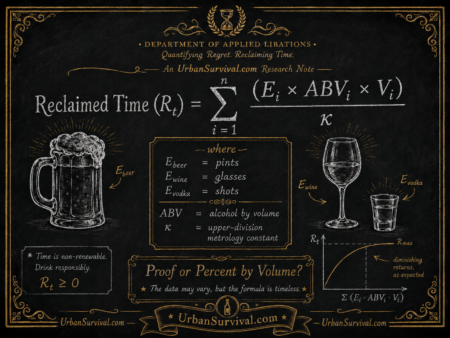
Remember: Don’t drink and do research!
Write when you get rich,
George@Ure.net
By jove, I think you nailed it!
It, not Her, you dirty dogs.
“You see, there’s a problem: Reading (and thinking) are going out of style.”
You aint shiitting..
“Humans are allowing themselves to read less deeply. And so, as a consequence, they think less deeply”
This is exactly why Braiding Sweetgrass” has taken me an inordinate amount of time to READ this Summer, that and all the self edumacation in the Peptide space. I have to take small breaks to think about what I just read, and or wipe tears from my Eyes.
Two and half more chapters to go and Im running out of kleenex. Not balling mind youse, just a Tear here and there as I go along.
When books/writings contain “information” from “the spiritual” side of the equation, they can change Time for you…its Ure Perception.
*Bonus
Cerluten -the oral king of Brain Regeneration.
Neuro protection – Cognition – Nerve Repair
No needles required. Only oral Brain peptide I found that truly worked. While some have gravitated towards MemoProve (NPEP) marketed as oral equivalent of Cerebrolysin. Cerluten simply performs better. One of main benies, speeds recovery in post-stroke and long-term traumatic brain injury patients. reduces fatigue, absent mindedness, and sleep disturbances. Outperformed MemoProve in subjective and group reported outcomes ( although should be mentioned this was not an official trial.) -BH/ Peptide Salvation
**The “great fall” begins on the 22nd – but the HARVEST begins on the 26th. Will you be out Hunting, or be out Hunted ?
Sept 19 – Black Bear – Archery opens in Pennsyltucky (WMU’s 2B, 5Cand5D).
..what did ya think I was talkin bout ?
Guess I am still a label reader – most of the peptides seem to be made (cerluten sources) from bovine brain peptides. Um, hard pass.
reutzfeldt-Jakob disease (CJD; “CDJ” is a common misspelling) is a prion disease. The infectious agent is a misfolded form of the prion protein (PrPSc), not ordinary small peptides. Variant CJD (vCJD) in humans has been linked to consumption of tissues from cattle with bovine spongiform encephalopathy (BSE, or “mad cow disease”), especially central nervous system (CNS) tissues such as brain and spinal cord.
Why bovine brain material is high-risk
Prions concentrate in the brain, spinal cord, and related tissues of infected cattle.
These are classified as Specified Risk Materials (SRMs). In the U.S., SRMs include the brain, skull, eyes, trigeminal ganglia, spinal cord, and certain other tissues from cattle 30 months of age or older (plus tonsils and distal ileum from all cattle).
FDA rules (21 CFR 189.5) prohibit the use of these materials in human food, dietary supplements, and cosmetics.
Prions are unusually resistant to heat, ordinary sterilization, and many proteases. Complete inactivation requires aggressive conditions (strong alkali, high-temperature hydrolysis under pressure, prolonged enzymatic treatment under specific conditions, etc.). Simple peptide extraction or mild hydrolysis of infected brain tissue would not reliably eliminate infectivity.
Peptides / hydrolysates specifically
Small peptides themselves are not the infectious agent. However, if the starting material is infected brain and the processing does not fully destroy prion aggregates, residual infectivity can remain.
Scientific opinions (e.g., European Scientific Steering Committee) have generally considered hydrolyzed proteins safe when the raw material comes from healthy animals, avoids high-infectivity tissues/contamination, and uses an appropriate transformation process. This applies more readily to lower-risk materials such as hides than to brain tissue.
Commercial “bovine brain peptides,” polypeptide extracts, or nootropic-style products derived from brain would be subject to the SRM prohibitions if they use restricted tissues.
Practical risk today
BSE controls in cattle (feed bans, SRM removal, surveillance) have greatly reduced incidence in countries with strong systems. Classical BSE cases linked to the historical epidemic are rare.
No documented cases of vCJD have been attributed to dietary supplements or purified peptide products under current regulations.
Risk is not zero if someone used unregulated, improperly sourced, or inadequately processed bovine brain material (especially from older animals in higher-risk regions or historical material).
Bottom line: Bovine brain tissue from an infected animal can transmit the prion agent that causes vCJD. Properly regulated commercial peptide or extract products should not contain prohibited SRMs and should pose negligible risk. Unregulated or poorly processed brain-derived material is a different story and is best avoided.
The Brain Eaters (1958) Trailer
https://m.youtube.com/watch?v=6K0GUAhy6Ew&pp=ygUgVGhlIGJyYWluIEVhdGVycyB0cmFpbGVyIHlvdXR1YmU%3D
AI /crypto promo video . sponsored by covid vax bought to you by spike protein
re: Hold the haggis?
feat: “Don’t have a cow.”, Bart Simpson
The 1958 film “The Brain Eaters” was produced by AIP (American International Pictures, LLC). The Wiki record informs that one of the cofounders passed away from an onset of a brain ailment in 1972. After mergers and reformulations over the years, AIP is now revived under the Amazon umbrella.
The UK Department of Agriculture website advises readers that Scotland received a BSE (which causes v/CJD) label as “negligible risk” in 2017, and the UK followed in 2025. ChatGPT notes a “negligible risk” national recategorization permits additional cattle parts into the feed and/or food chain. These can include the last four meters of the small intestine, intestinal (mesenteric) fat, caecum, tonsils, and certain vertebral columns.
Msm began circulating a government announcement this past Wednesday identifying a BSE cattle case on a farm in Scotland. “The Scottish Daily Express” offers an update at their following link:
https://www.scottishdailyexpress.co.uk/news/scottish-news/mad-cow-disease-case-found-37570057
The talking points used seem largely unchanged from a similar 2024 event reported on by the “BBC” at the following link:
https://www.bbc.com/news/articles/cw4dqnj1pjko
Interestingly the Wiki page on CJD opens up a line of food for thought. People with particular genetic markers are prone to immediate onset of CJD illness. Others with different genetic markers can be subject to vCJD illness onset years or decades following exposure.
Happy Fish Friday to All!
The affected people possess superhuman strength. This is due to a mixture of their adrenal glands going nuts and the fact they honestly don’t care how much damage their bodies take in their afflicted state. Stu Anderson literally tears himself apart trying to get free from the Biotron orderlies struggling to subdue him, and Norman Hastings is able to wrench open the handle for the emergency exit of the plane he’s in despite it being locked in place. Steward Mike Endersbee notes that this shouldn’t be possible.
Good day home gamers! Zo, it appears that Bitcoin is ready to test $80K, it’s my understanding that ~$3 Billion in shorts were wiped Wednesday and that was at ~$70K wonder how much more rekkage has occurred since then?
https://decrypt.co/376085/bitcoin-price-high-june-3-billion-shorts-liquidated
Not advice, got lunch.
I sure do get the weather dependent time crunch. Both kids off doing their own life choices, husband wheel-bound, and I’m racing time to get through property and gardens maintenance. Unexpected problems and past project corrections shortens that window. That aside, I still love where I live. Just wished needed supplies weren’t so expensive.
long life? HDL is high, LDL is low… how to do that? Omegas…more concentrated the better.
DHA is Key
Can get by with low EPA, but can’t maintain optimal brain without DHA.
Remember that DHA isn’t just another omega-3, its structural brain material.
Kyiv, Israel fighting ‘same axis of evil’ as Russia deploys Iranian weapons: Ukraine envoy
De facto state of World War has existed since COVID 19 bio warfare release, Russian invasion of Ukraine, Trump taking Venezuela, attackinf Iran before it has nukes, new theaters will manifest soon, someone will underestimate the other’s response. My wife says the extraterrestrials won’t let us destroy the Earth with nuclear weapons because of some cosmic significance our planet holds in the celestial soul firmament.
big yada yada today and plenty of talking in tongues . holding all short positions and others and now after 30 years , shorting gold and gold stocks . all safe on indexes but fairytale make believe safe . a polish fortune teller , give me a break . cankickers have now developed urger skills
What if? 1) british on/about 1990 or so said Ukraine no nucs and Russia gets them and Ukraine independent state? 2) British moved into Ukraine and helped USA elect a true leader. 3) True leader wanted all territory back including Donbass..4) It was obvious from post 1990 Putin was to be leader of Russia and lawyerhood would suffice to obtain territory back. 5) Ukraine would fight below nuclear thresholds by then new items, UAVs. 6) no pain no gain… stalemate as USA missles would be depleted over time 7) no act war in USA so no real funds 8) in end one of two options… either USA has spare missles that work or it doesn’t. If it does a real communist Russian invastion of Europe would be stopped. So did British think this far ahead? 9) three cups one pea…generally speaking British win knowing where the pea is, Russia chess win… USA? 10) Merkel home? Why? to many colors in rainbow raping pillaging…Merkel fix? Fix fails… All colors go home? No reason to say a threat to Russia? no nuced although up to now everything is bad.
even got zero days in your magic oval , “voodoo” system but we will hide that aye !! maybe use a magic chocolate wheel or roulette wheel with weights on bull bets . ride em cowboys kill that USD$ boyz . big patriots
“is maybe the most unsold, unread, under-appreciated book on Amazon.” My now 29 novels have mostly the same fate. Reading for enjoyment or to gain knowledge is fading with each generation, each gain in life’s complexity, and the millions of new books on Amazon. My latest, “F**K It, I’m Goin To Texas’ is mostly based in East Texas.
At least writing keeps my mind active, and I never expected to get rich from writing.
[Ure chimes in: Andy’s newest is on Amamazon at https://amzn.to/4xMiA1Y for Kindle…]
I really, really, REALLY wish you guys would hash through a POD option. I rarely do Kindle. I prefer to flip paper pages and use a paper bookmark. Some of your books (specifically George’s MMM) are valuable enough to future generations that they must be available in print form, so they can be gifted to dumbasses who truly need enlightenment.
There are at least 50 “print on demand” printers in the U.S., probably 500 in Ureup and 5000 in India, where POD is big business. Just sayin…
BTW, AG: I’ve been gritching at George about this for at least 15 years — even found him a couple Indian printers who’d do single copies and drop-ship direct, and he STILL hasn’t put [The] MMM in hard copy so I can buy a half-dozen of ’em. Go figure…
Every time I get that far into my LOSTD I think about rewriting and updating…and then I’m back into hopeless circularity again for another year… (Cut a crazy OF some slack here Ray…but yeah MMM is a good book with lots of heart in it.)
Ahhh, but now you have a spelchker and grammatician which can do the cleanup in seconds. That one Indian publisher with the gold leaf faux leather binding sticks in my head. Shame I can’t remember who it was.
You don’t get to update — That’s the next book or the next edition…
I’ve done some of my books in print on Amazon’s POD, but it’s not a direct Kindle to POD, it has taken me a few days to do all the necessary formatting. If the Kindle version is selling well, it’s worth it, otherwise, not so much. Time’s a wastin, as Snuffy Smith used to say, & we have only so much left.
PS: I’ve been an insatiable reader since I was 11, but the last few years I’ve had to switch to eBooks for my reading, so I can adjust the font to max. For future generations, a thumb drive is a more durable option than a paper book. If humanity loses all the tech, the survivors will be too busy grubbing a living to spend much time reading, even for classics like George’s work.
George,
If you have room, I suggest that you buy a second refrigerator designated for beer and white wine. Just one in white, not very expensive, and not so large of a second refrigerator would be a big help. I have one in my garage. And, there might be those occasions where you need a cold shelf for a specific food item that could fit in the second refrigerator.
“I suggest that you buy a second refrigerator”
That’s a valid point. Buy a used one, preferably 15-20 years old. It likely will outlast a new one, and it’ll be much cheaper.
“Every layer saves us task time while adding system complexity…
“We have spent several centuries building machines to save time. Yet people increasingly complain they have none. Where did it go?
“Part of the answer to the syn-time equation may be that saved time didn’t remain human property. It was captured.”
The complexity does not affect our personal time, unless we have to manually recover from a hiccup.
People complain they “have no time” because they have become increasingly inefficient. Animals are lazy. Man, being able to shortcut life via our ability to reason and recall, is lazier. Every mechanical or technological advancement enables us to be lazier still. Every step we take toward laziness increases our inefficiency. Every step someone else takes to “spare us” both increases our laziness and decreases our aptitude. My eldest daughter is soon to be 38. She is the only one in her peer group, male or female, who can either change her own oil or change a tire. She has done both (to their utter amazement.) Her friends all go to the Valvoline store and pay 80 frickin’ dollars to have their oil changed — not because they don’t want to get their hands dirty, but because they’re so ignorant they don’t even realize they might.
The “saved time” was NOT captured. It was given away…
Good pushback Ray — and I think the distinction is worth making.
I agree that a lot of “saved time” is simply given away through declining competence. If you no longer know how to change a tire, fix a faucet, cook from basics, diagnose a machine, or even navigate without a phone, then technology hasn’t merely saved labor. It has also replaced capability.
But I don’t think that disproves the capture argument. I think it describes one of the mechanisms by which capture occurs.
Suppose technology saves you an hour. That hour can go three places:
You keep it — rest, think, build, learn, visit somebody, make something.
You surrender it — scrolling, convenience consumption, passive entertainment, learned helplessness.
Someone else captures it — your employer raises expected output, a platform monetizes your attention, bureaucracy fills the available space, or the economy simply resets the productivity baseline upward.
Your $80 oil-change example is especially good because it contains all three. The machine made oil changes easier. The service industry monetized the convenience. And the customer surrendered both money and competence.
So perhaps my original sentence needs sharpening:
Saved time does not automatically remain human property. Some of it is captured. Some is surrendered. And some is lost because the skills that once made us independent are allowed to atrophy.
That may actually be a better formulation of the syn-time problem.
The machine saves the hour.
The interesting question is still:
Who owns the hour afterward?
My retirement paradox: Here all this time I thought I would have more [discretionary] time in retirement – not less!
We still own the hour.
You’re blaming the roulette wheel for the gambler’s compulsion.
You choose to have less discretionary time. You do not HAVE to write a book, fix the roof, mow the grass, mend the fence, or CW to Bangladesh. You choose to. Just like you choose to run US/PN. We’re all damn’ glad you do, but the impetus (and the choice) are completely your decision. Essentially, you’re exchanging things you find esthetically or emotionally appealing, or mentally or spiritually gratifying, for a portion of that discretionary time. Yes, your yard would suck if you never mowed the lawn, but it (and you) would survive… Understand?
I can agree with most, but 20 meter CW DX is mandatory neural plasticity work!
“If you no longer know how to change a tire, fix a faucet, cook from basics, diagnose a machine, or even navigate without a phone, then technology hasn’t merely saved labor. It has also replaced capability.”
I was watching a video yesterday demonstrating the latest Garmin glass panel. It does EVERYTHING computation-wise from taxi out to parking on arrival. But what happens when there’s an electrical failure in IMC? Are there backup analog instruments? IF you paid big bucks for the glass, do you even remember how to use the analog? Or will you be a greasy spot on the side of a mountain?
like when my cfi pointed and said “This is your VSI – see that? Mount Rainier…”
Back when I was learning to fly in ’75 my pilot friends rented the 172 and flew to Oshkosh for the weekend. I had to work, so got left behind. Upon return takeoff from Oshkosh at sundown, the generator failed. No lights, no radio, too dangerous in traffic to turn around and land at Oshkosh again, so they headed west on the compass. Four pilots aboard, none brought a flashlight. They occasionally lit a match to see if they were still upright. Flew an hour in the dark until they saw the beacon at Central Wisconsin airport. Buzzed the tower in the dark and got a green light for landing. And slept on the floor there. Phoned home in the morning and got the FBO mechanic to fly in and fix the plane. Nobody made it to work on Monday. I missed my only opportunity to go to Oshkosh, and was glad I did.
Just as well – 5 in a 173 is over mgtow but I’ve only got a hundred hours or so in type
yeah Weight BreakdownMax Takeoff Weight: 2,550 lb Basic Empty Weight: ~1,680 lb (varies by installed equipment)Useful Load: ~870–878 lbFull Fuel Payload (53 gal): ~560 lb Max Baggage Capacity: 120 lb
“Reclaimed Time” on this island is ‘Prepping for the NEXT storm’! Sheesh.
Time is THE illusion.
The navigators before TIME was a common thought, didn’t need it. Observance of the celestial was the key.
All things at the speed of the universe.
Stiks
“In his Mathematische Grundlagen der Quantenmechanik, the 1932 book that defines quantum mechanics until this very day, von Neumann attributes the indeterminate nature of quantum physics to input from the observer’s consciousness that is outside of mathematical calculations.
He said the entire universe could be described as a wave function, and wave function collapse is due only to the consciousness of the observer. Among physicists, this school of thought is called the von Neumann–Wigner interpretation. Its wild abandonment of determinism has always had little appeal to an academia that has built its temple on the foundation of rationalism.’ – Peter Pan Meets Pyramid Head by Jack Heart & Orage – The Human: Jack Heart, Orage and Friends
Seems like half the people writing comments are drunk or stoned, can’t make heads or tails what they are trying to convey. On another note, people who have other people shop for them are saving time but spending extra money. It’s a toss up.
Johnny was smoking smokes on the Johnny Carson show tonight. The olden days when America had freedom. The commies have destroyed what was.
Speaking of commies –
“…even though we inherited this debt bomb from the Biden administration…”
– Vance
Some folks will fall for that. Dozing Don needs more time to cut spending. After the ballroom… and the Irany war win. So much winning.
Speaking of Iran that commie Drudge says, “USA warned of ‘October surprise’ from Iran…”
The old “October surprise”. What, 10 years running now? People love reruns, Johnny testifies. Even though him, the band, the chortling sidekick, probably most of the live studio audience are all in the great beyond.
Deployable Energy’s new compact nuclear reactor
I first read about Deployable Energy on Joanne Nova’s website and was very interested in their innovative small modular nuclear reactor and how it worked. The reactor was produced under President Trump’s 2025 nuclear reactor plan. It was designed by Australian Bobby Gallagher and his team in Houston. It can produce one megawatt of power, at a cost of 15 cents per kilowatt hour, for five years before refueling is required. The entire reactor can fit on the bed of a Ford F150 pickup
https://wattsupwiththat.com/2026/08/21/deployable-energys-new-compact-nuclear-reactor/
In the 70’s Westinghouse proposed a portable Nuclear plant in a 40′ trailer with the idea they would be deployed at substations across America. After 5 years the trailers would be disconnected & replaced to be returned for refueling & service to be reused. The project never got off the ground because no one wanted them in their neighborhood.
AI has changed the rules, maybe?
That, and these new “pocket reactors” (my term) are exponentially safer than the old atomic piles scattered along rivers and the Great Lakes. Tech has evolved A LOT in the last 70 years. Our energy production facilities have not.
We STILL have not built a new petroleum refinery since 1979. IMO it’s beyond stupid, pumping 10-, 12-, 18-million barrels of crude out of the ground every day, then shipping it elsewhere because our refineries can’t process it. I filled up at $2.83/gal on Thursday. If we were making our own gasoline with our own oil, it might have been 83¢/gal…